


-
ENQUIRIES & QUOTES
Call us today for expert advice
- 0800 001 6432
STEEL BALL AND ROLLERS
BALLS
Everyday life would be very different without the use of steel balls, as they are in almost every domestic appliance, bicycle, motorbike, car, train and aircraft. Every time you wash your hands and use a soap dispenser, it is the ball that enables you to get a measured amount of soap.
We’re capable of supplying loose balls in nearly every variation of grade and material available.
We’re also able to offer bespoke ball manufacturing. This follows the same process controls and traceability but using a customer’s own material. For further details, please email us or call +44 (0)7414 822432
In order to simplify the purchase of balls, we have devised our own grading system based on ISO and ABMA standards.
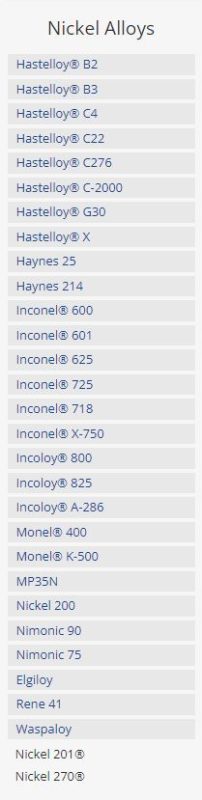
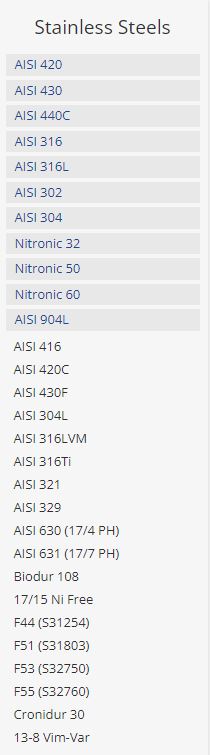
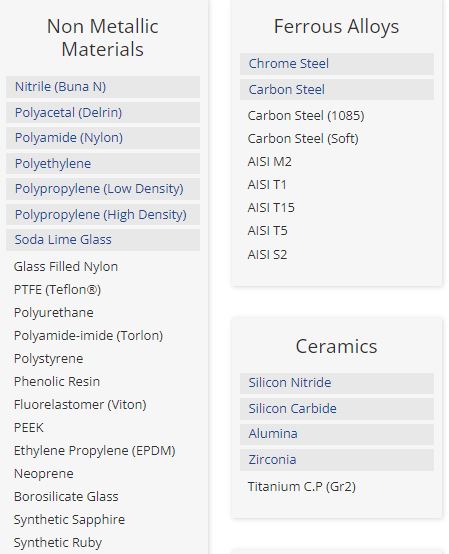
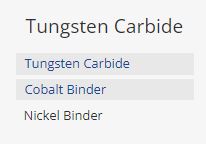
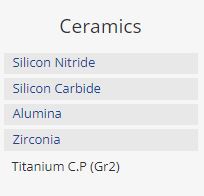
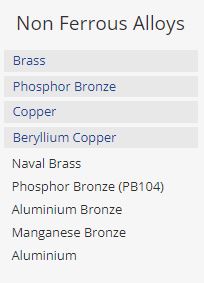
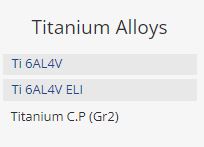
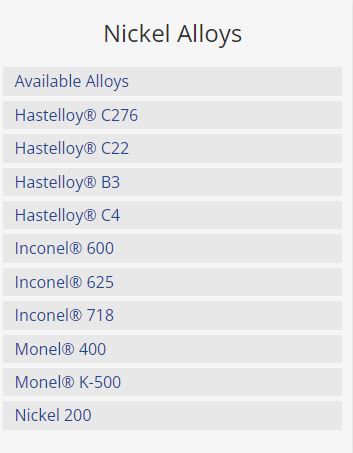
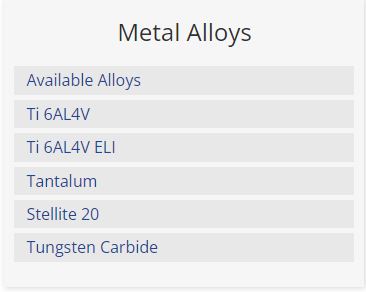
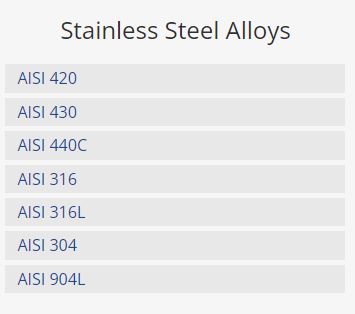
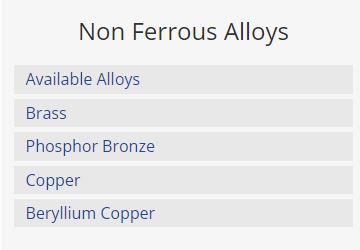
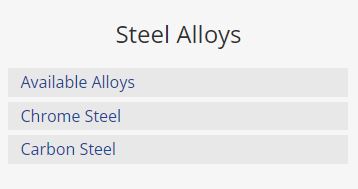
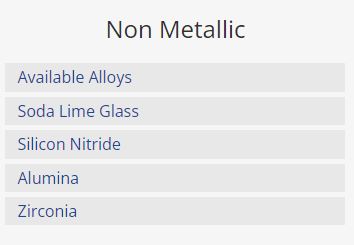
Material details below represent a fraction of the available alloys. Please contact us for more details about our Available Alloys datasheet at the bottom on this page.
Precision Balls in All Materials and Grades
Grade Application
G5, G10 High precision bearings, gauges
G25 Precision bearings
G100 Bearings, drawer
G200 Soap dispensers, body jewellery
G500 Automotive seat slides, bicycles
G1000 Castors, unground bearings
G2000 Agitators, decorative uses, weights, ballast
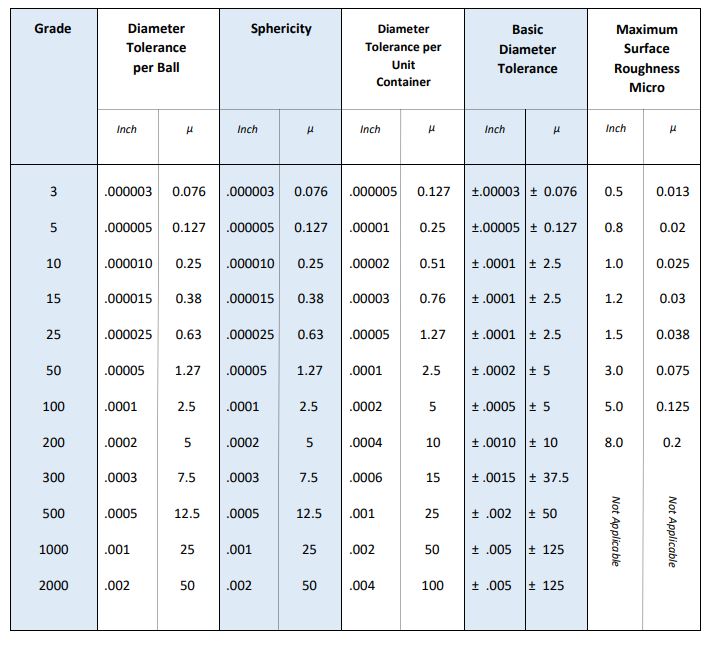
Ball Grades
Material Datasheets
Useful terms and definitions
Batch or Lot: A definite quantity of balls manufactured under conditions presumed to be uniform and which is considered an entity.
Nominal Ball Diameter: The diameter value that is used for the general identification of a ball size.
Single Ball Diameter: The distance between two parallel planes tangential to the actual ball surface.
Diameter Tolerance per Batch: The allowed difference between the smallest measured ball diameter and the largest ball diameter within the same batch or lot.
Sphericity: A measure of roundness expressed as the difference between the measured roundness of a ball and a perfectly round ball.
Surface Finish or Roughness: A measure of the texture of a surface. It is quantified by the vertical deviations of the actual surface from its ideal form. If these deviations are large, the surface is rough; if they are small, the surface is smooth.
Hardness: A measure of resistance to penetration as determined by specific methods, usually Rockwell or Vickers Hardness.
ROLLERS
We supply many types of rollers, for use in a wide variety of applications. The main types of roller are as follows:
- Needle Rollers: Available with either round or flat ends.
- Cylindrical Rollers: Available with flat ends (either ground or unground) and with either a straight or logarithmic (crowned) profile.
- Cylindrical Spindles: Available with round or flat ends.
Materials
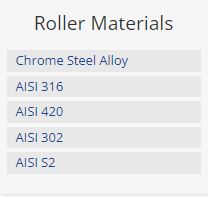
Rollers are usually manufactured in chrome steel (UNI 100Cr6) but can also be produced to special order in:
- AISI S2 and M2 Tool Steel
- Stainless steel AISI 302, AISI 316 and AISI 420
Hardness
Chrome steel rollers are manufactured to a hardness of HRc 58 – 65 (653 – 832Hv10).
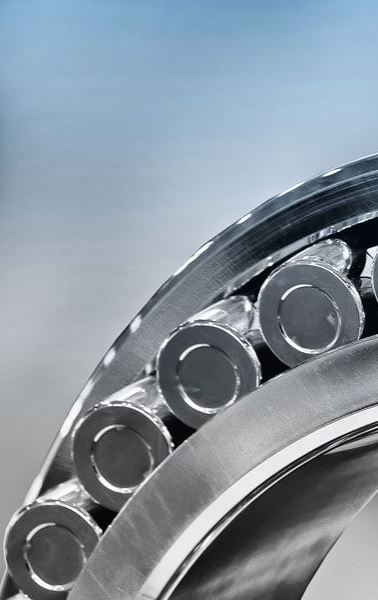
Needle Rollers
Needle rollers have a small diameter (1mm to 6mm) with a length of more than three times the diameter. Their main use is as rolling elements in bearings, where they are particularly useful when space is limited and a high radial load is required. They are also great as locating pins and mini-shafts.
The following diagram shows end shapes and profiles.
The following diagram shows end shapes/profile
Contact us for the list standard size and weight chart
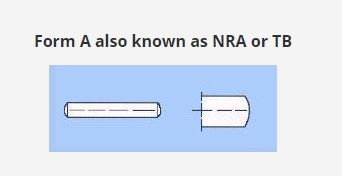
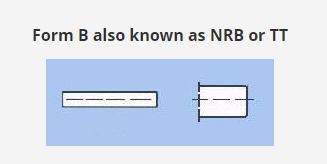
Where no grade is specified when ordering, Atlas will supply NRA G5 with a diameter tolerance of +0 ~ -5µm
Cylindrical Rollers
These are flat-ended rollers and generally have a length that is one to three times the diameter. The diameter size range available is from 2.5mm (0.0984″) to 70mm (2.7559″), with lengths ranging from 4mm (0.1575″) to 70mm (2.7559″).
The main use for cylindrical rollers is in bearings, with other uses including automotive seat slides and rockbit drills.
Rollers normally conform to the tolerances shown below.
Whilst the standard cylindrical rollers have a straight profile, they are available with a crowned or logarithmic profile, details upon request.
Cylindrical Spindles
These are long rollers that are used as pins or dowels, or as shafts in micro electric motors. The diameters available are from 2mm (0.0787″) through to 8mm (0.3149″), with lengths from 10mm (0.3937″) through to 100mm (3.937″).
Available Materials
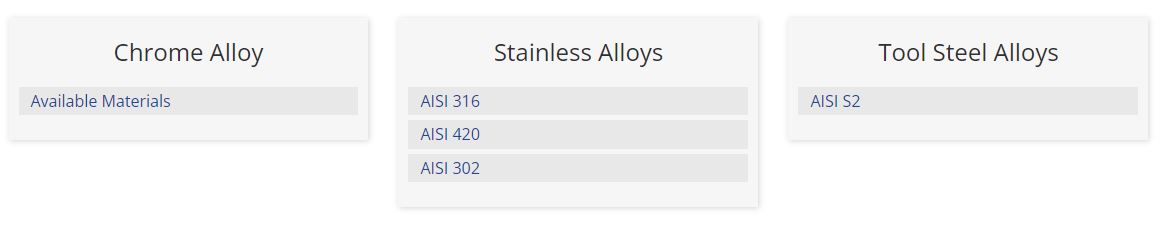
Manufaturing Materials List