


Rotary Shaft Seals (Various Materials )
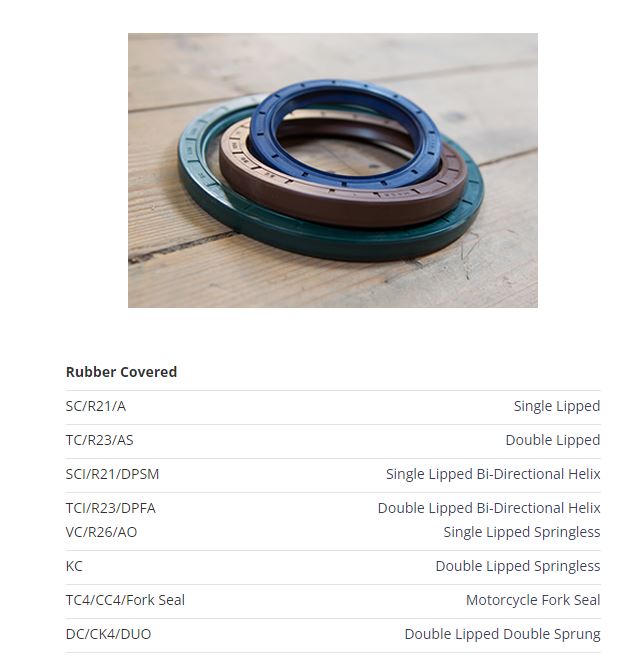
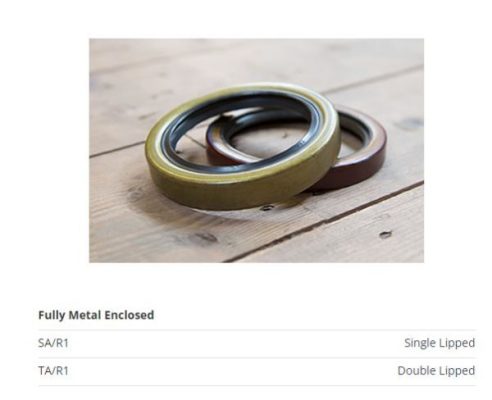
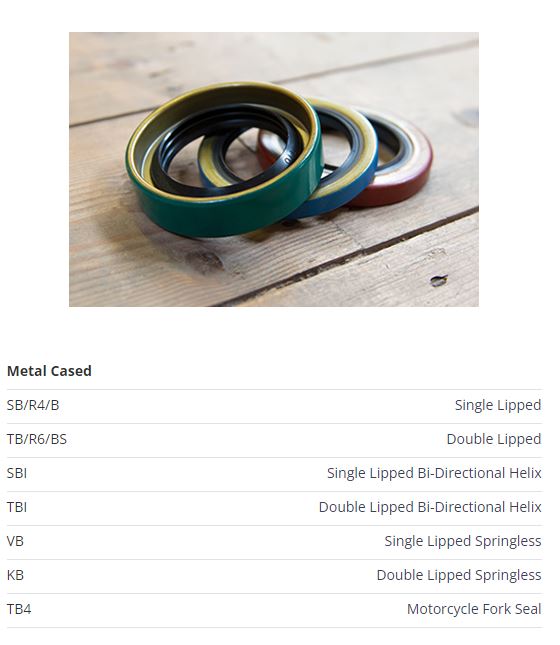
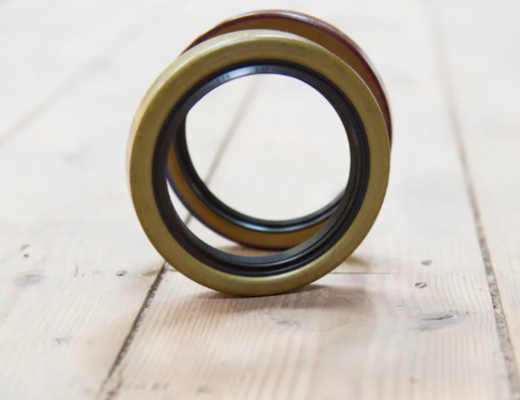
As the name indicates, this style of rotary shaft seal is fully enclosed! The main benefit of this style is the very stable construction which in turn offers a better protected sealing member in comparison to the open backed style.
This style of seal is the hardest wearing as it seals with a reinforced metal case.
Such a style is mainly used on larger shafts when the diameter is beyond 150mm, or when a small shaft requires extra strength.
It is not unusual to see such a style used when a special rubber compound is required.
Fully closed seals are more commonly single lip but can be supplied with a double lip.
Materials
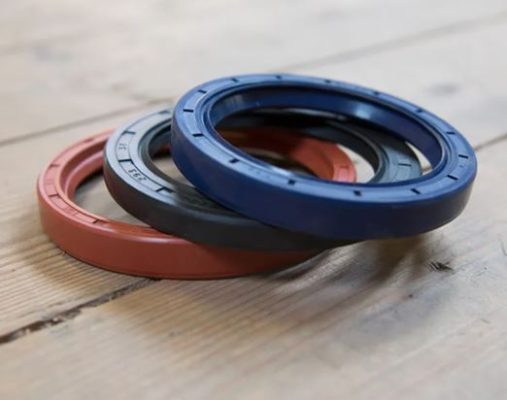
Nitrile Rubber (NBR)
NBR is the most commonly used material.
It has good heat resistance properties, good resistance to oils, salt solutions, hydraulic oils and petrol.
Operating temperatures are recommended from -40 to 120 *C.
Fluorinated Rubber (Vi)
Fluorinated rubber is widely known under the du Pont trade name VITON.
It has the best resistance to chemicals together with superior performance to high temperatures.
Operating temperatures are recommended from -30 to 200 *C.
Silicone Rubber (SI)
Silicone compounds are unsurpassed in its resistance to heat and low temperatures. The high lubricant absorbency of silicone minimises friction and wear. It is usually used for crank shaft seals.
Silicone has poor hydrolysis resistance and should not be used in oxidized or hypoid oils.
Operating temperatures are recommended from -50 to 180*C.
Polyacrylate Rubber (PA)
Acrylic rubber has a better heat resistance than Nitrile rubber.
It is recommended for high surface speed environment.
It should not be used with water.
Operating temperatures are recommended from -20 to 150*C.
Guide To Seals
QUALITY
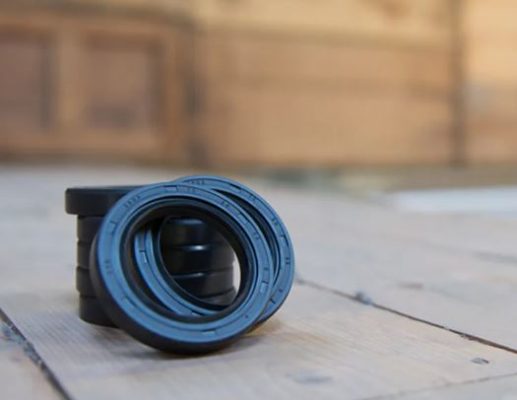
Careful selection always pays in the end! Rotary Shaft Seals are engineered to give optimum performance and a long service life.
Both TTO and NTK rotary shaft seals are precision manufactured and subject to stringent quality control through all stages of production.
We offer full product traceability and all parts are manufactured in accordance to the industry recognised DIN 3760 standard.
DESIGN
Operating conditions together with performance requirements obviously affect the choice of rotary shaft seal.
A wide range of special types and styles are available from stock and bespoke solutions can be designed to meet your individual needs and requirements.
The following standard designs satisfy the majority of applications…
FITTING
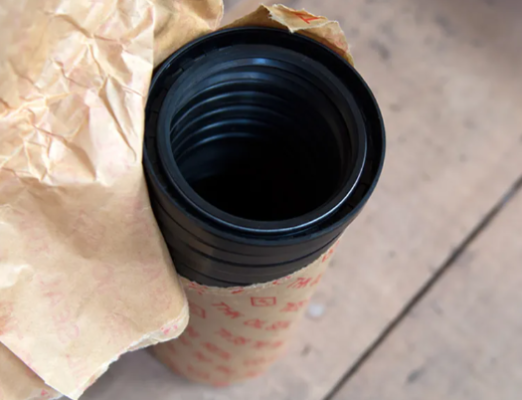 Correct fitting is of vital importance to the performance and life of a seal. A badly fitted seal can, moreover, cause damage to bearings and rotating parts, leading to costly downtime. Seal replacement should take place in as clean and dust-free surroundings as possible.
The shaft should be thoroughly clean. Remove all burrs, sharp edges, uneveness and particles, and apply a thin coating of pure mineral oil. Keep the seal in its wrapping until just before use. Carefully smear the sealing lip with pure mineral oil. Take care to fit the seal at right angles to the shaft, while ensuring that the lip is not damaged. Remember the lip diameter is somewhat less than that of the shaft.
If the shaft has a square shoulder, a special sleeve should be used when fitting the seal. The diameter of the sleeve must be somewhat larger than the shaft’s so that the seal can be eased over the edge without damaging the lip.
Use a bell tool or similar to distribute the load when pressing the seal into position.
If the seal is to be fitted with the open side outwards, a special tool may be required. Be careful with the sealing lip. It is sometimes necessary to remove the spring in order to position the seal properly.
LEAKAGE
Any appreciable leakage is very seldom the fault of the seal itself. It is most often the result of defects on the shaft or in the seal housing. It can also be due to the seal being of the wrong type or careless fitting. Try to trace the leak. If the leakage appears to come from the seal itself, carefully remove it and wipe it clean, and examine it.