


Single direction tapered roller thrust bearings
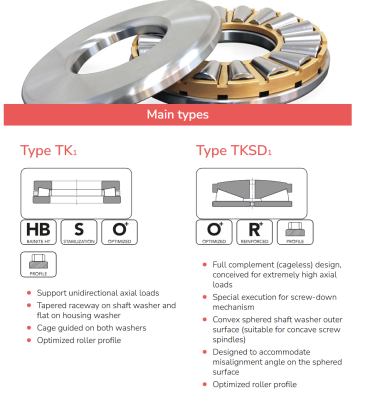
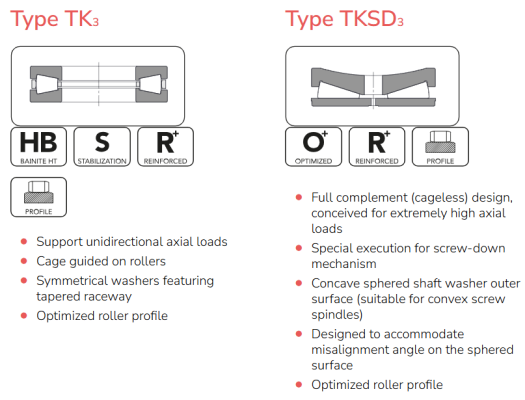
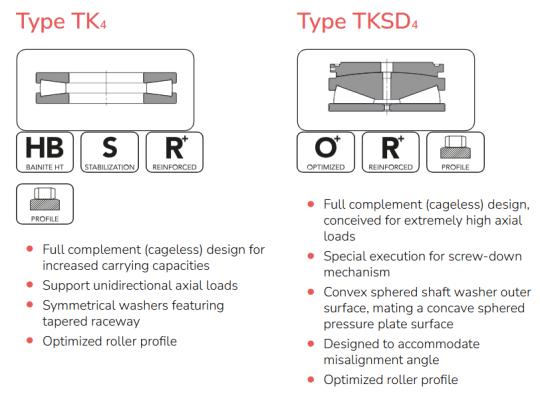
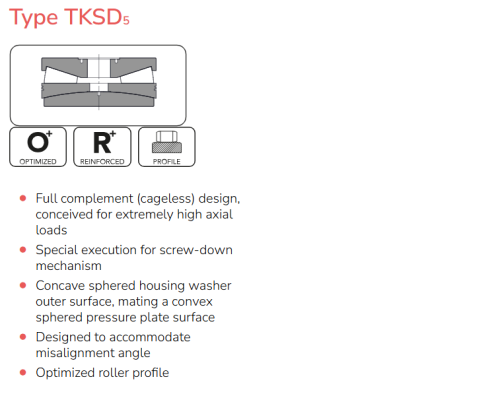
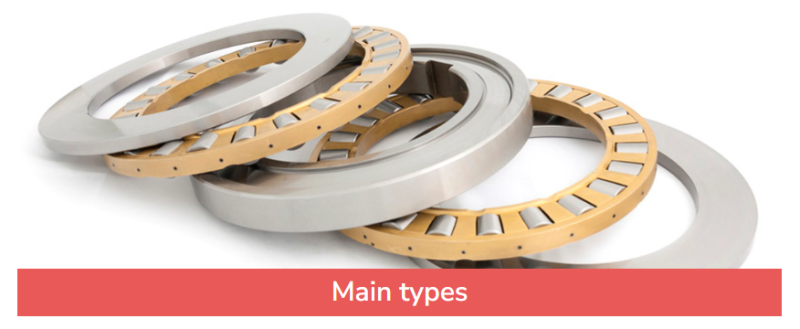
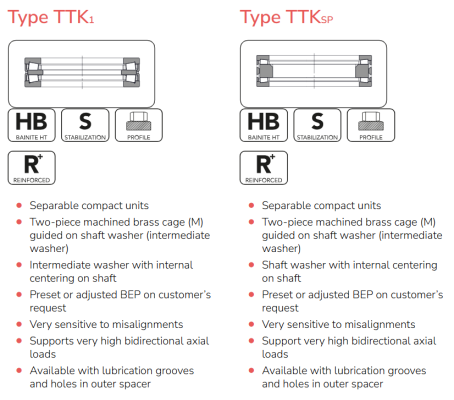
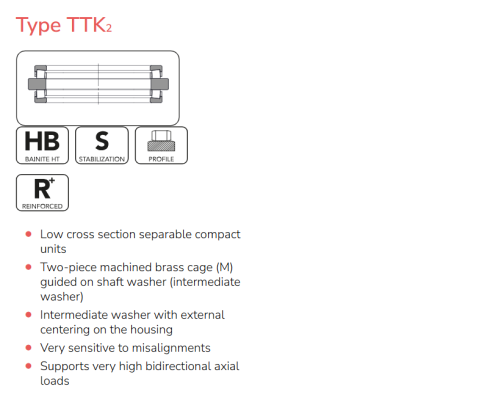
Single direction tapered roller thrust bearings come in several designs. The first configuration features a shaft washer with a tapered raceway, a two-piece machined brass cage, one row of tapered rollers and a flat housing washer. They can accommodate axial forces in only one direction and can accept a small eccentricity between shaft and housing without compromising their performance. The second design has two identical tapered washers and a two-piece machined brass cage. This configuration is suggested where very heavy axial loads acting only in one direction have to be supported. On request, for increased carrying capacity, a full complement design can be supplied. Finally, TKSD bearings are tapered roller thrust bearings for screw-down mechanism, where there are extremely heavy axial loads in one direction. In order to maximize the load carrying capacity, this kind of bearing is normally provided full complement (cageless). Moreover, they have to permit angular movement of the screw spindle respect to the support, without negatively affecting the bearing life. The angular movement may be accommodated by a sphered washer (shaft or housing washer). RKB can supply the suitable pressure plates.